Ski holidays Germany
Where can you go skiing in Germany?
If you ask winter sports enthusiasts where they can go skiing in Germany, most of them will think of one place in particular: the Zugspitze. Germany's highest mountain, located in the very south of Bavaria, is widely known as the natural border with neighbouring Austria and is also very popular as Germany's highest ski resort. The slopes on the Zugspitze plateau reach up to 2,720 metres, with the summit cross standing at 2,962 metres. There is enough snow here until May for almost unlimited skiing enjoyment.The Bavarian Alps have other natural gems to offer with attractive ski resorts, such as the Allgäu or the Fellhorn-Kanzelwand border area. Oberstdorf, located on the Nebelhorn in the Oberallgäu, for example, is world-famous as the venue for the Four Hills Tournament. With a whopping 128 kilometres of slopes stretching into the neighbouring Kleinwalsertal valley on the Austrian side, it is also one of the larger contiguous ski areas on German soil. The Berchtesgadener Land region is also an attractive area with its six ski resorts facing the majestic Watzmann (2,713 m).
Far away from the edge of the Alps, Germany still has plenty of other winter sports resorts to offer: officially, the Federal Republic has over 600 ski areas! Many of them are cosy little areas with only one or two lifts and manageable slopes. But some areas are also of a respectable size and correspondingly varied. After all, there are magnificent low mountain ranges in all parts of the country that offer every opportunity to have fun in the snow. The Bavarian Forest, for example, which is part of the Bohemian Forest in eastern Bavaria, is not only the largest forest landscape in Central Europe, but also an extensive low mountain range and home to some remarkable ski resorts. A popular destination and the highest ski mountain in the Bohemian Forest is the Großer Arber (1,456 m), which has 10 kilometres of slopes and is also attractive for families with the Arbär-Kinderland. In addition, the Bohemian Forest extends across the border to Czechia, where it is called Sumava and is also a unique recreational area. The Black Forest enjoys a worldwide reputation. In addition to Bollenhut hats and cherry cake, the ski resorts there are also known far beyond the country's borders. The Feldberg lift network is particularly worth mentioning here, which, with 63 kilometres of slopes, is one of the larger ski resorts in Germany.
Incense smokers, candle arches and mining romance – the Ore Mountains in the east of the republic not only offer traditional flair, but also varied skiing fun for all winter sports enthusiasts. A fascinating mountain and cultural landscape as well as cross-border ski areas make Saxony a very popular winter holiday destination. Nordic athletes also get their money's worth in the Ore Mountains: the Ore Mountains Ski Trail runs across the entire mountain ridge to the border with Czechia. One section runs around the Fichtelberg and thus past the spa town of Oberwiesenthal, the highest town in Germany.
It's hard to believe, but in Germany, skiing is possible in all directions: In the relatively flat west lies the Hochsauerland with the Winterberg ski lift carousel, which combines 27.5 km of slopes. The centre is characterised above all by the Thuringian Forest and the Oberhof ski centre on the Rennsteig, which became popular through the Biathlon World Cup. Finally, in the north is the Harz, Germany's northernmost low mountain range.
Why book ski holidays in Germany?
What’s great about Germany’s winter sports region is its diversity. Where the altitude and surface area tend to make for smaller ski areas, the sports programme proves to be much larger. The terrain is in most places quite wide and fairly level, so that a few cross-country centres, for example, have been able to take root and provide an extensive cross-country network throughout the area. Nordic sports has developed into a booming trend like never before, especially in the states of Thüringen and Saxony. Along with it comes the unique culture and natural landscapes, of which makes Germany a truly interesting holiday destination for nature-lovers and those seeking a bit of rest and relaxation. Those who prefer a laid back holiday surrounded by a snowy winter wonderland with access to several non-ski related activities will feel right at home in the German Mittelgebirge (a low-lying mountain range).What is so special about ski holidays in Germany?
A diverse leisure programme, smooth pistes, and manageable ski areas with blue pistes - German ski areas are the ideal winter sports destinations for families with small children. The little areas are quite navigable and offer excellent child care services. However, beginners and intermediates of all ages will also find German ski areas to be the perfect fit. The somewhat larger ski areas also provide some fun slopes, timed runs and sizeable snow parks, so the youth and adrenaline junkies will definitely get their money’s worth. In the Mittelgebirge, between 900 and 1,600 m, many of the pistes lie below the tree line, so that winter sports fans will find many romantic, wintry forests along the runs.How long is it possible to ski in Germany?
Due to the low altitude in the Germany’s Mittelgebirge, there is enough snow to have the main season run from December to March. Areas that typically receive quite a bit of snow include the Ore Mountains and the Black Forest, as well as some parts of the Allgäu and areas along the edge of the Alps like Berchtesgadener Land and the Zugspitze region. The longest ski season in Germany can be found in the Zugspitze region thanks to its altitude ranging between 2,000 - 2,720 m. The ski area is normally open from December to the beginning of May. The sun tends to shine higher up, while the valley and the lower-lying ski areas disappear underneath the clouds.Regions Germany
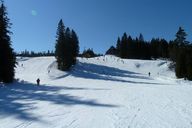
Baden-Württemberg
Baden-Württemberg is especially known for its wonderfully diverse landscapes of the Black Forest, stretching from the Swabian Alb right down to Lake Constance. With regards to winter sports, the area is specially geared to families. Perfectly prepared pistes and modern lifts dominate the mostly smaller ski areas. The centre of it all is of course Baden-Württemberg's highest mountain, the Feldberg (1,493 m), which has a number of smaller ski areas grouped around its flanks. The Swabian Alb also offers great family-friendly ski areas with some diverse offers away from the pistes.
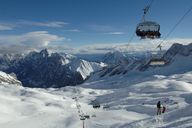
Bavarian Alps
Upper Bavaria's white-blue skies stretches over the entire range of what winter sports fans may dream of. Germany's highest located ski area, the Zugspitze, provides miraculous views of the breathtaking winter landscape in the German Alps. Pros will speed down the World Cup run Kandaha in Garmisch and after skiing you can enjoy the hearty local cuisine. The Allgäu offers the perfect combination of sports, relaxation and spa. With the largest ski arena in Germany, the Fellhorn-Karwendel area, this is a superlative winter holiday area.
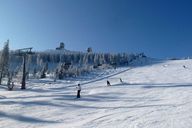
Bavarian Forest
The Bavarian Forest is central Europe's largest forest with 6,000 km² of wooded area. In 1970 the national park Bavarian Forest was created which, together with the Bohemian Forest, forms the largest coherent forestal nature reserve in central Europe with a total span of 900 km². Besides of the Alpine region, this region is also known for its affinity to winter sports. Especially families will find exactly what they are looking for here. Those who prefer not to explore the Bavarian Forest on skis, can also go on a romantic horse-drawn sleigh ride. The lovely castles and monasteries of the Bavarian Forest are definitively worth while a visit. Numerous restaurant and quaint huts, which offer regional as well as international culinary highlights, should be on your list of to-do's as well.
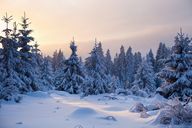
Harz
The Harz is the northernmost Mittelgebirge (low mountain range) in Germany. Even though the region cannot score with the highest mountain tops, there are nevertheless several small ski areas which are great for beginners due to their gentle hillsides. However, not only Alpine skiers get their money's worth in the most popular areas at the Bocksberg, Wurmberg, Matthias-Schmidt-Berg, and Sonnenberg, but also those who like to do cross-country skiing as the Harz is known for its well-kept tracks. The biggest ski area lies at the highest mountain in Lower Saxony, the Wurmberg (971 m).
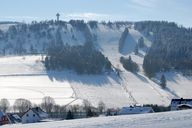
Hochsauerland
The Sauerland, situated in south-eastern North Rhine-Westphalia, is surrounded by the lower Hesse mountains, the upper Sauerland mountain brim, the Wittgensteiner Land, the Siegerland as well as the Bergische Land. Also known as the "land of a thousand trees", the highest mountains in the Sauerland contribute significantly to Germany's winter sports regions. No matter if it is the toboggan or bob run on the Winterberg or the Mühlenkopf ski jump in Willingen, this unique atmosphere is something you shouldn't miss!
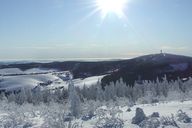
Saxony
Saxony is a holiday state. With cities like Dresden, Leipzig and Chemnitz, its landscape dotted with castles and a rich music and theatre scene, Saxony has a lot to offer. But it hasn't only established itself as a destination for culture fans but also for winter sport lovers. The Erz Mountains and the Vogtland have ski areas with guaranteed snow, which are especially popular with families due to their vast offers of winter sports activities. The Fichtel Mountain near Oberwiesenthal is the centre of Saxon winter sports and at the same time the largest ski area. The only interconnected ski area of Saxony is the Ski World Schöneck, which is also a certified family ski area. A variety of smaller ski areas are suitable most of all for beginners.
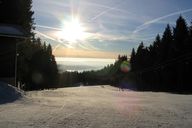
Thuringia
The ski areas in Thuringia are especially popular, due to their central location almost in the heart of Germany. The best-known holiday region, the Thuringian Forest, is also the centre of winter sports in this federal state. The beautiful mountains entice both Alpine and Nordic ski fans, and also the snowboarders will feel welcome here. The ski area offers the steepest piste in Thuringia, with a 55 - 80% incline. Hotspot for Alpine and Nordic skiers alike, is the spa resort Oberhof - and should the weather not be the best for outdoor activities, you can move your skiing adventure indoors to the ski hall. A further superlative for you: the small resort Heubach offers one of the largest funparks in Germany.
Resorts in Germany
| Resort (region) | Pistes |
Ski area altitude from – up to |
|---|---|---|
| 2 km | 740 - 826 m | |
| 32 km | 1,130 - 1,559 m | |
| 12 km | 565 - 970 m | |
| 40 km | 795 - 1,554 m | |
| 31 km | 700 - 1,712 m | |
| 8 km | 900 - 1,463 m | |
| 12 km | 1,050 - 1,456 m | |
| 40 km | 795 - 1,554 m | |
| 6 km | 906 - 1,069 m | |
| 8 km | 840 - 1,121 m | |
| 2 km | 778 - 931 m | |
| 12 km | 565 - 970 m | |
| 13 km | 828 - 2,224 m | |
| 1 km | 900 - 940 m | |
| 2 km | 715 - 896 m | |
| 2 km | 830 - 1,730 m | |
| 60 km | 740 - 2,720 m | |
| 2 km | 560 - 726 m | |
| 60 km | 740 - 2,720 m | |
| 4 km | 971 - 1,190 m | |
| 3 km | 710 - 1,417 m | |
| 12 km | 1,050 - 1,456 m | |
| 31 km | 700 - 1,712 m | |
| 16 km | 911 - 1,215 m | |
| 3 km | 678 - 768 m | |
| 4 km | 930 - 1,250 m | |
| 15 km | 980 - 1,350 m | |
| 8 km | 900 - 1,463 m | |
| 5 km | 720 - 1,030 m | |
| 28 km | 866 - 1,338 m | |
| 60 km | 740 - 2,720 m | |
| 275 km | 620 - 1,869 m | |
| 1 km | 900 - 940 m | |
| 1 km | 718 - 835 m | |
| 18 km | 745 - 1,170 m | |
| 13 km | 828 - 2,224 m | |
| 16 km | 911 - 1,215 m | |
| 1 km | 506 - 602 m | |
| 27.5 km | 630 - 820 m | |
| 40 km | 795 - 1,554 m | |
| 42 km | 740 - 1,860 m | |
| 6 km | 657 - 1,050 m | |
| 12 km | 565 - 970 m | |
| 14 km | 980 - 1,580 m | |
| 16 km | 911 - 1,215 m | |
| 40 km | 795 - 1,554 m | |
| 1 km | 612 - 690 m | |
| 2 km | 620 - 760 m | |
| 8 km | 900 - 1,463 m | |
| 1 km | 718 - 835 m | |
| 14 km | 980 - 1,580 m | |
| 12 km | 565 - 970 m | |
| 2 km | 940 - 1,060 m | |
| 1 km | 650 - 948 m | |
| 28 km | 866 - 1,338 m | |
| 12 km | 565 - 970 m | |
| 17 km | 578 - 838 m | |
| 28 km | 630 - 820 m |